



“The next winter will be no less difficult than the previous one” - such statements have been coming from representatives of various levels of government since the summer. At the same time, they began to urge Ukrainians to prepare for winter and possible blackouts.
In October, the Ministry of Internal Affairs approved action plan in case of long-term power outages.
The Ministry of Internal Affairs sees its function not only as increased patrolling by police groups, but also as providing generators to medical facilities and critical infrastructure, operating the Unbreakable Points, etc.
For Ukraine, gas is a traditional resource. Although gas is now a fixed price, prices are still high on the EU market. That is why it is important for the country and the community to diversify heat supply sources that will not depend on imported resources, or in case of damage to gas pipelines, consumers will not suffer, as an alternative source can be used.
International partners are also helping Ukraine survive another winter under fire. For example, the German government and the EU financed by construction of six energy-independent hospitals in six regions. Autonomous solar power plants with an installed capacity of 70 kW were built for each hospital.
The solar station also includes 50 kW of backup power storage installed in modular hospitals, hybrid and grid-tie inverters, and software for online operation of the stations.
In addition to general preparations at the state level, local authorities or residents of individual settlements are also trying to prepare for a difficult winter.
For example, in the Cherkasy region, the community is preparing for a possible blackout and is starting to produce fuel pellets that can be used to heat socially important infrastructure.
How one problem was turned into a solution to another
The city of Talne, Cherkasy region, decided to prepare for a possible blackout and started producing fuel pellets that can be used to heat social facilities in the event of a power outage.
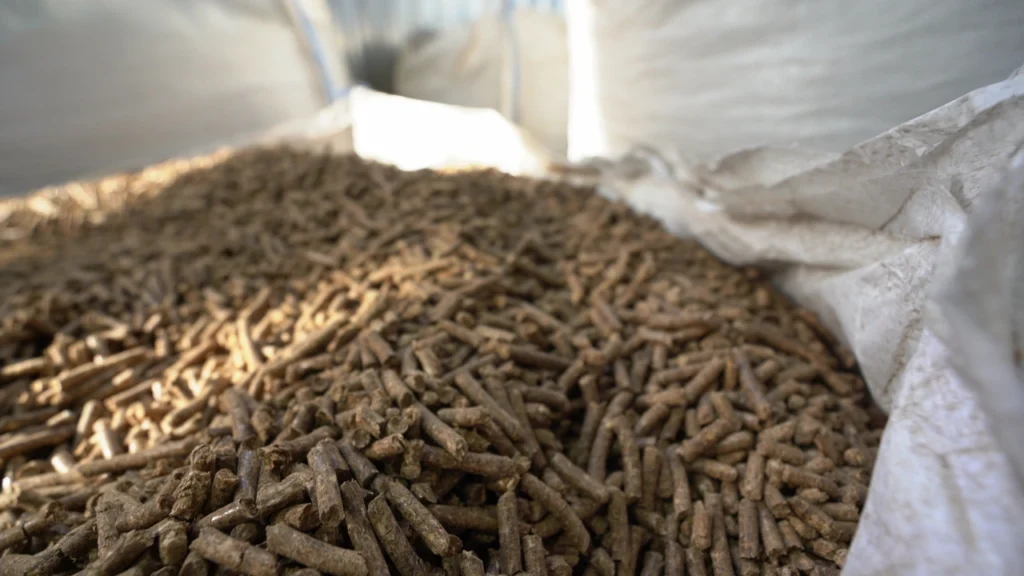
The fuel pellets for the heat-generating boiler are made at a local enterprise. The raw material used is wood chips - chopped small tree branches.
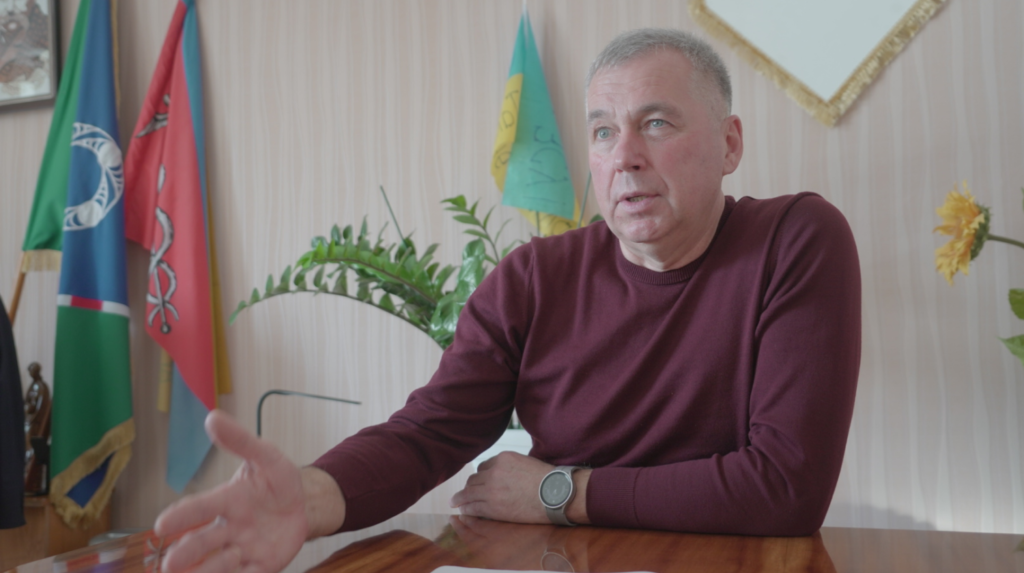
According to Vasyl Sidko, head of the Talniv City Council, this wood chip used to be a problem for the community, as utility companies had to collect it and take it to a landfill. Accordingly, the community had to allocate funds for this.
“Since the community on 90% was gasified, fuel wood was not given much attention. So it grew and accumulated over the years. In the villages, the population decreased, houses became empty, and bushes and trees grew. The community is faced with the task of clearing the territories of villages and towns of overgrown, self-grown trees. This is not cheap, as it requires appropriate equipment, human resources, and additional costs. However, if we use wood as a fuel material for heating schools, kindergartens, and rural health posts, the situation will improve significantly,” the Talniv City Council emphasized.
If such small tree branches were burned in an open space, it would lead to a large emission of carbon dioxide. Instead, pellets do not contain any chemical compounds. This fuel is environmentally friendly and, unlike gas, is not explosive.
In addition, pellets are well stored, do not rot, compared to wood chips or firewood, and therefore do not lose their ability to burn.
Mutually beneficial partnership between the community and business
While clearing the area of overgrown trees is an improvement and a direct task of the community, the production of pellets from wood chips is an opportunity to establish production.
This is how the idea of a partnership between the community and business emerged to combine the interests of both parties. Kolvi Green Energy, whose founders are from Cherkasy region, came forward as a business partner.
“We are planning to develop not only this production but also solar and wind energy in Talnivskyi district, and possibly a fuel and hydrogen biorefinery. We chose this community for implementation because it is my homeland, I come from the village of Talianky,” said Oleksandr Kroshka, the investor's representative.
An “unattractive land plot outside the city” was allocated for the construction of the waste processing site, which is a source of raw materials.
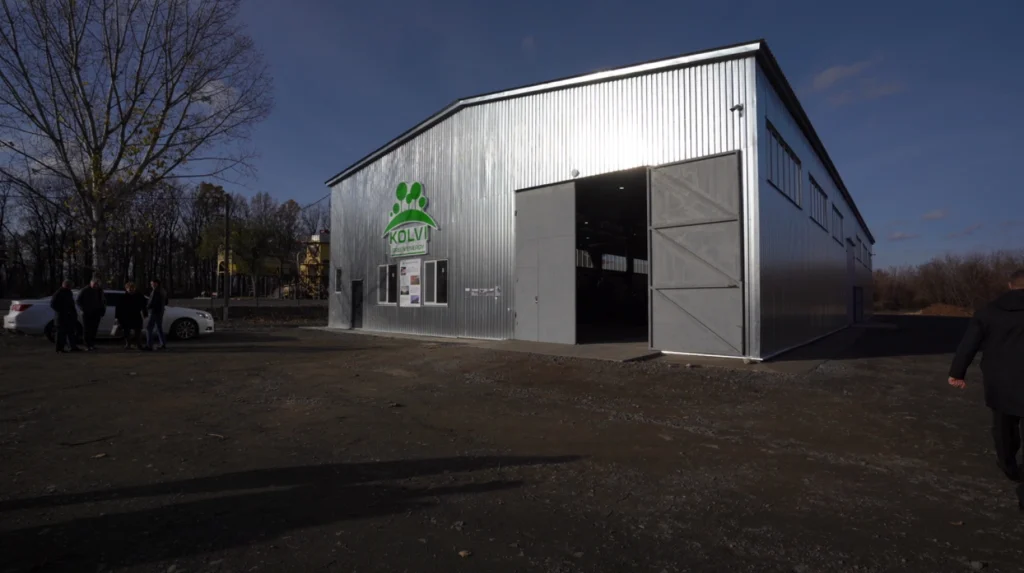
The premises were built by the Talniv City Council, and the equipment and production was set up by a commercial organization. The community also purchased 2 tractors with 3 chip cutters of different capacities for harvesting raw materials.
The cooperation was arranged on a contractual basis: the city council supplies wood chips and leases the premises, and Kolvi Green Energy produces and sells pellets at auction.
The pellets are to be sold to the community at the market price, but the company is obliged to buy all the wood chips from the community.
Kolvi Green Energy has taken on several more obligations:
- manufacture products in volumes necessary to meet the needs of the region (at least 500 tons per year);
- creation of new jobs (at least 10 people);
- maintaining the company's core business for 10 years;
- technical re-equipment, modernization of production with investments of at least UAH 4 million per year.
The lease agreement was signed for 49 years. The city council noted that such a long term implies the company's long-term investment in the development of green energy in the Talniv territorial community.
The investor plans to invest more than UAH 200 million in the community over 5 years in the production of fuel pellets, as well as solar and wind power.
What needs are covered by alternative solid fuels
Currently, a pellet heating boiler has already been installed in the territorial center where elderly people in need of care are staying. According to the mayor, they plan to install such boilers in schools and kindergartens.
In one hour, the company can produce 400 kilograms of pellets, and 3.2 tons in an 8-hour shift.
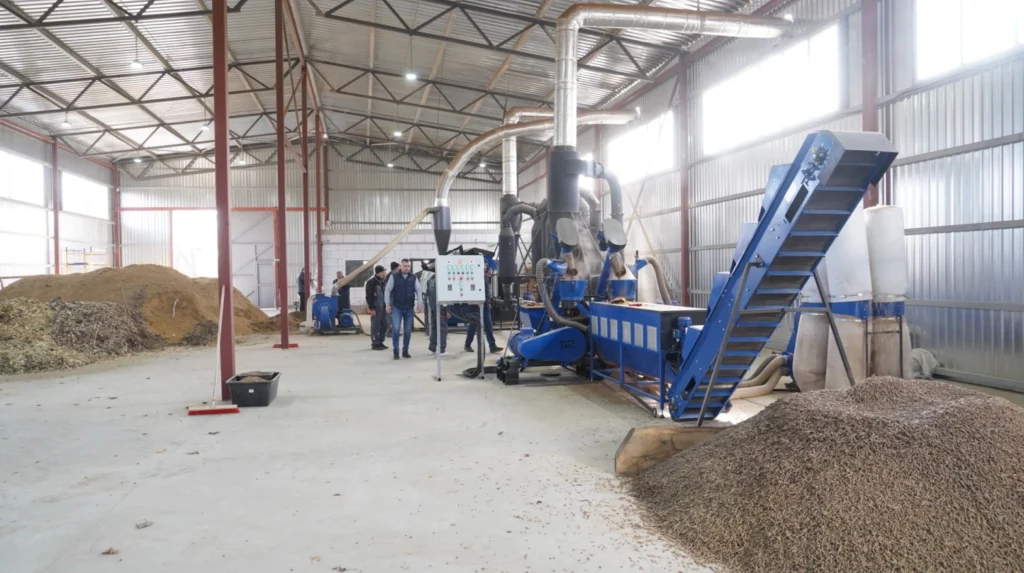
1 ton of pellets is approximately equal to 5 MW of heat production. An average kindergarten and school can be heated for 50 hours from 1 ton of pellets during the heating season at negative temperatures.
Compared to gas, 2 tons of pellets roughly replace 1 thousand cubic meters of natural gas.
“We will continue to work and attract even more investments to develop this project. It is also interesting for us to demonstrate to Ukrainians that business and community partnerships can develop communities, achieving a multiple effect, both socially significant and economically feasible, and how it is possible to build such an enterprise together on partnership terms,” said Oleksandr Kroshka.
In addition to covering local needs, Kolvi Green Energy expects to enter the European Union markets, as there is a strong demand for energy-efficient projects and solutions there.
Natural gas and electricity account for about 70% of European heating, and due to the sharp decline in supplies from Russia, wood, which is already used by about 40 million people for heating, is being cut, has become a popular product.
The risk of gas shortages in Europe this year low, unless there are some serious unplanned supply disruptions or prolonged cold snaps that hit Europe and Asia simultaneously.
Kolvi already has agreements and signed contracts with Italy for the export of fuel pellets, so such small and local steps taken by the business and the local community are also of national importance in terms of our products entering foreign markets, economic recovery and reducing the balance of payments deficit.
Source: Ekonomichna Pravda