


Combustible gas has been, is and will remain a key energy resource for Ukraine's economy in the near future. Therefore, the issue of its efficient and rational use should be a key one in all gas use sectors.
Most often, experts pay attention to energy efficiency projects in the field of power generation and electricity supply, thermal modernization of buildings, and reconstruction of heat transportation and supply systems. And the gas use sector, especially in the utility sector, is usually neglected. However, the energy saving potential in this sector is significant.
Suffice it to cite the value of the efficiency of gas stoves, which is standardized according to DSTU 2204-93 “Domestic gas stoves”, which is only about 59% (!).
Or provide the standardized concentration of carbon monoxide (CO) in the combustion products of stoves. It is set by law in the range of 625 to 1250 mg/m3 (!).
And this is despite the fact that the maximum permissible one-time concentration of CO in the air of populated areas is only 5 mg/m3. And the permissible concentration of CO in the work area is only 30 mg/m3.
That is, even the standardized concentration of CO in the exhaust gases of a gas stove exceeds the sanitary standard for the working area of industrial enterprises by 42 times. And for stoves that are in operation, these indicators will be even worse.
Thus, the current baseline provides ample opportunities for improving efficiency and environmental safety. And the significant volumes of natural gas consumed in the utility sector could guarantee quick results from the implementation of measures to reduce gas consumption and preserve the health of people using combustible gas.
But the need to implement such measures in the gas supply sector is not even declared yet.
Let's touch on another aspect of the use of combustible gases - the composition and physical, chemical and combustible properties of natural gases. Until recently, a significant amount of natural gas was supplied to Ukraine via main transit pipelines from the neighboring aggressor country. This was mainly gas from pure gas fields with a predominant content of methane (up to 95%-98%) and a small amount of heavy hydrocarbons. Accordingly, the calorific value of such gas was not very high and amounted to about H = 37....38 MJ/m3 (8800...9000 kcal/m3).
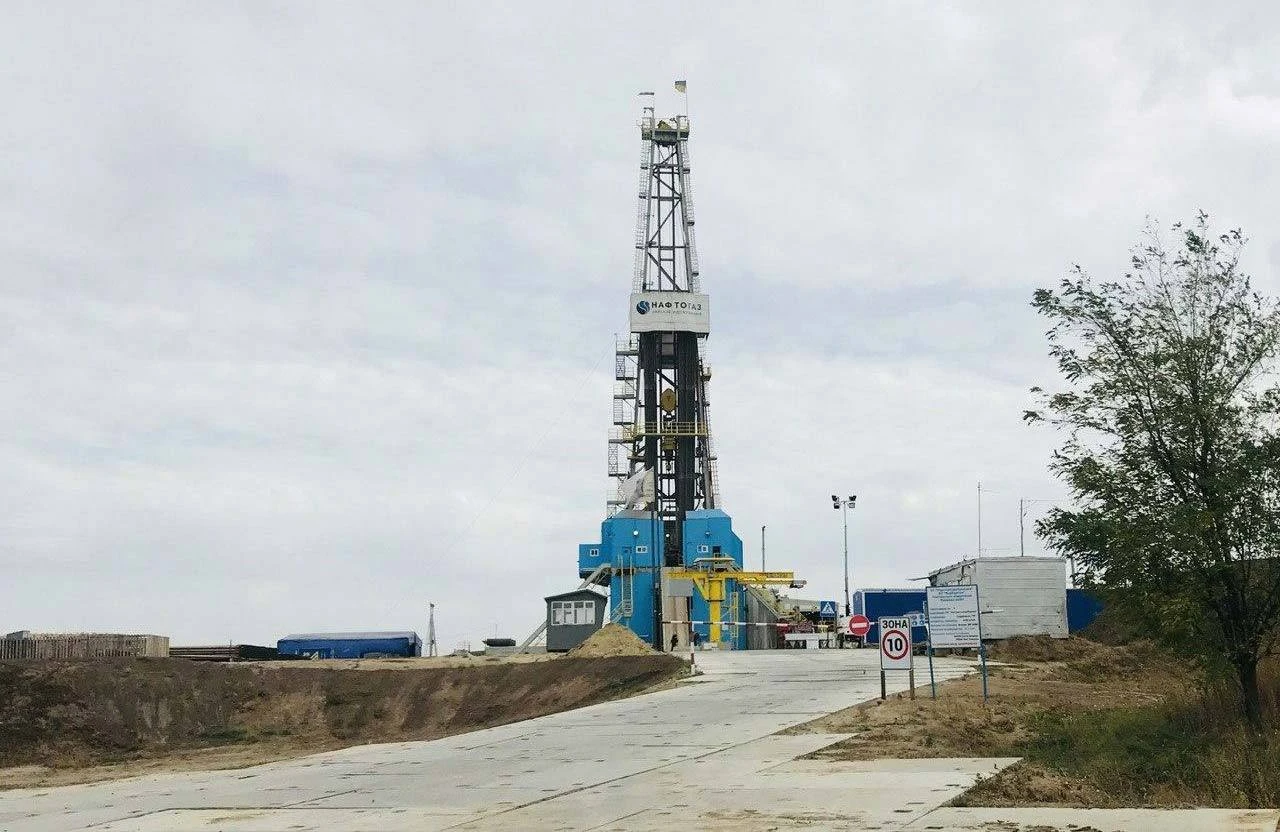
After gas transit from the aggressor country was stopped, Ukraine's gas condensate fields became the main source of natural gas supply to the Ukrainian gas supply system. Their gas composition differs from that of purely gas fields: the methane content decreases, while the content of heavy hydrocarbons increases. This leads to an increase in the calorific value and changes in the physical, chemical and combustible properties of the combustible gas.
The average higher calorific value of natural gas, for example, from Berezivka CCF is 39 MJ/m3 , and Yablunivka CCF is 39.8 MJ/m3 . There are fields for which the calorific value of natural gas is 40...41 MJ/m3. This is 8-10% higher than the calorific value of the gas supplied earlier.
All gas from different fields enters a single gas supply system, and its composition may change over time. This is because the distribution of gas in the country's gas supply system depends on the ratio of demand and production, as well as the mode of its accumulation in gas storage facilities.
The consumer can receive gas of different composition. And gas appliances, gas burners of thermal units and their operating modes remain unchanged. And this is the main problem.
Changes in the physicochemical and combustible properties of natural gas will inevitably lead to changes in the operating modes of gas combustion equipment, changes in their thermal output, operating conditions, efficiency and stability of the gas combustion process. These changes will also have an adverse effect on the operation of heat-using equipment on which gas equipment is installed (boilers, process devices, gas appliances).
It should be noted that the industry produced most of the gas combustion equipment and devices for gas from pure gas fields, which was supplied before gas transit was abandoned. And to burn more caloric gas, it is necessary to make structural changes to the design of such burners, change the amount of combustion air, the operating settings of gas burners and adjust the parameters of heat exchange surfaces of thermal units.
In addition, the gas combustion equipment market needs to take into account that the legislative and regulatory support for the industry has changed significantly.
Previously, the main document that regulated the requirements for combustible gas was the Soviet GOST 5542-87 “Natural Combustible Gases for Industrial and Domestic Use. Technical specifications”.
Later, the NERC adopted Resolution No. 2493 dated 30.09.2015 “On Approval of the Gas Transmission System Code” (the “Code”).
Both documents were quite “democratic” and not very demanding in terms of natural gas quality and efficiency of its use.
According to GOST 5542-87, natural gas with a lower heating value of at least 31.9 MJ/m3 was allowed to be used for industrial and municipal purposes; the range of values of the higher Wobbe number was quite wide, from 41.2 MJ/m3 to 54.5 MJ/m3, and the deviation of the Wobbe number for combustible gas over time was allowed no higher than 5% from the contractual value; the concentration of sulfur and oxygen in the combustible gas was limited.
The higher Wobbe number of 54 MJ/m3 will be typical for gas with a methane content of up to 80%, ethane up to 15% and nitrogen up to 5%.
According to the Code ...., the gas transmission system could be unlimitedly supplied with combustible gas with the following characteristics: methane bridge - at least 90%; ethane - maximum 7%; propane - maximum 3%; higher calorific value - in the range of 38.85 to 41.10 MJ/m3.
Thus, the majority of natural gases produced in various fields could be supplied to gas pipelines and consumers. The problems of loss of gas combustion quality and reduction of efficiency of gas combustion devices were not the limiting factors in such standards.
However, in 2016 and 2018, two new regulatory documents came into force in Ukraine that radically changed the situation with regard to the requirements for combustible gases: DSTU GOST EN 437:2018, “Test gases. Test pressure. Categories of devices”. K.: 2018 and DSTU ISO 13686:2015. Natural gas. Quality indicators (ISO 13686:2013, IDT). К., 2016.
These documents implemented European requirements for combustible gases. Thanks to these standards, new concepts appeared - “family of gases” and “group of gases” as types of combustible gases with similar characteristics, classified according to the criterion of interchangeability - the Wobbe index. The concept of “appliance category” was introduced as a means of identifying a family of gases or groups that are intended for safe use in a gas appliance and for achieving the required level of gas efficiency.
Thus, for the first time, the concepts of fuel efficiency and interchangeability of combustible gases appeared in the national regulatory documentation.
Looking ahead, these approved standards have not yet been reflected in the practice of designing, manufacturing gas appliances or operating gas-burning equipment. And the outdated requirements of the ”Code...” are still used as standards.”
And in vain. Adherence to the adopted national standards could significantly change the situation in the country's gas industry - and not only in it.
Let's take a closer look at this. According to EN 437, combustible gases are divided into three families, and each family is divided into groups depending on the Wobbe index.
The graph below shows the classification of second-family gases by EN into groups L, H and E and the classification according to GOST.
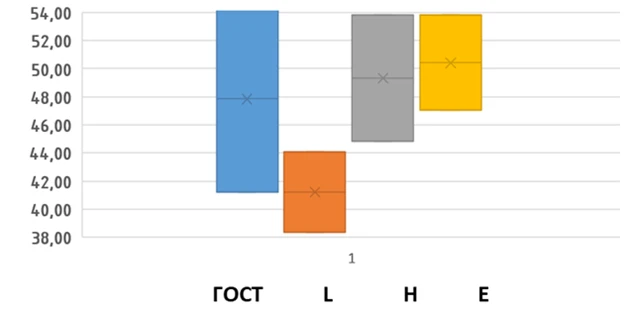
Calculations of the higher Wobbe index for different natural gases showed that the gas from pure gas fields that has been supplied so far belonged mainly to group L of the EN 437 classification. Most of the gas burners and household gas appliances were produced with this group and this gas.
The vast majority of natural gases produced in Ukraine's gas fields correspond to other gas groups - NG and NGL.
For each group of gases, the industry should produce its own type of gas combustion and gas burner equipment
For this purpose, for each group of gases, EN 437 specifies the composition of test gases that must be used in the manufacture and factory testing of gas equipment.
When natural gases from different fields or alternative types of combustible gases with different and distinctive combustible characteristics are supplied to the country's gas supply system, the supply of gas of a stable and constant composition to the consumer cannot always be guaranteed. However, ensuring such a requirement should be one of the requirements for concluding a gas supply agreement.
The concept of interchangeability is used to control the stability of gas characteristics. Compliance with the criteria of interchangeability ensures not only high efficiency but also the safety of gas combustion equipment.
According to DSTU ISO 13686:2015, the interchangeability of natural gases depends not only on the relevant gas parameters, but also on the characteristics of gas combustion devices used by gas consumers, as well as on the gas pressure at the end user.
A substitute gas can be considered interchangeable if it provides all the parameters of interchangeability: stable heat output, combustion without slippage and flame detachment, and the absence of yellow flashes in the flame without the need to change the burner design or combustion process settings.
If a gas burner or gas appliance meets the requirements of one or more families or groups, then to determine whether it can be used with combustible gases of other families or groups, it is necessary to check whether the burner or appliance meets all the criteria of the new group or family.
It is this approach to gas equipment that ensures high efficiency and stability of heat-using equipment.
Given that the composition of combustible gas can change unauthorizedly over time, it is necessary to ensure that the operation of gas combustion equipment does not neglect the constant monitoring of the physical, chemical and combustible properties of the gas supplied to the gas supply system in accordance with the data in the gas quality passports. Based on the results of such analysis, changes should be made to the operating parameters and design characteristics of gas combustion equipment in a timely manner.
When equipping heat-using units with gas burners, it should be borne in mind that transit gas from pure gas fields and natural gas from Ukrainian fields belong to different gas groups and require different gas combustion equipment.
When choosing gas burners, it is also important to analyze the prevailing composition of combustible gases and the available pressure in gas supply systems, depending on the location of the gas-consuming facility and the area for which the equipment will be used. And after that, choose equipment that has the appropriate labeling. Domestic manufacturers of such equipment are focused on working with foreign customers, including Kolvi TM, have long been applying labeling standards that include the appropriate identifiers: Roman numerals - the number of gas families to which the gas equipment corresponds; Arabic numerals - the number assigned to the gas family for which the gas burner or appliance is manufactured (for example, ”2″ - the “second family” of gases); a capital Latin letter that indicates the gas group for which the equipment is manufactured.
The full text and calculations are available at the link.
The following article will consider the possibility of using alternative artificial and synthetic gases in gas supply systems of industrial enterprises, as well as present the results of calculations of the main standardized criteria of interchangeability for natural gases produced in Ukraine.
Authors:
- Anatolii Koliienko, PhD in Engineering, Professor of National University “Yuri Kondratyuk Poltava Polytechnic”;
- Oleksandr Kroshka, Doctor of Philosophy in Architecture and Construction, CEO of Kolvi.
Source: Ekonomichna Pravda