


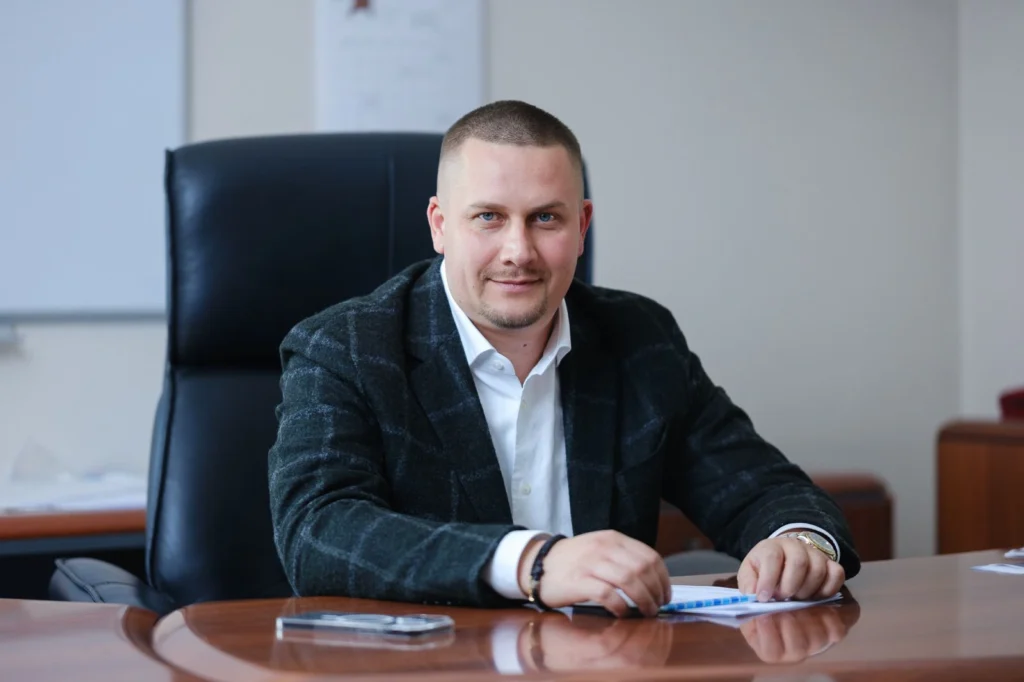
On preparations for the heating season, modernization of gas boilers and the future of green energy in Ukraine — a representative of the KOLVI trademark, chairman of the board of the Kolvi Charitable Foundation, tells RBC-Ukraine in an interview“ Oleksandr Kroshka.
- Kolvi is engaged in the development, production, sale and maintenance of heating equipment, including gas boilers. How has the company's work changed since the start of the full-scale Russian invasion?
- Immediately at the beginning of the invasion, we, like everyone else, were in shock. The plant was damaged, an airplane bomb fell. Thanks to the fact that the structure was quite powerful, everything survived. But it was a serious blow.
Many of our staff went abroad. But we survived the most difficult period and even increased our production capacity. We partially relocated to the west of Ukraine to protect our production and staff.
During the first months of the war, we were more focused on service in the Kyiv region, repairing damaged gas pipelines. We are not only equipment manufacturers, we are also a powerful service provider, project manager, and gas trader. We understand what they are and how to work with them, and we have access to the “high risk” category.
We helped with all possible resources to restore pipes, houses, meters, etc.
- How did the company fare in the previous heating season? What was the most difficult part of the work?
- The most difficult thing was that we lost Azovstal, and the supply of pipes stopped. We use a specific type of pipe - seamless - that not every manufacturer can produce.
We changed the supplier and now everything is working. We work with Koshevitsa and import all the metal from abroad. However, we can say that Koshovitsa is already Ukrainian, because as far as I know, there is a Ukrainian beneficiary there today.
- You recently participated in a discussion between business and government representatives (“Business Energy” - ed.). What are the government's main priorities in the run-up to the heating season?
- The general thesis, which I also strongly support, is that the government wants to move away from the concept of “preparing for the heating season” and do everything in advance and systematically.
If Ukraine has good equipment, reconstructed and modern boiler houses, if there are no gas debts because this mechanism has been worked out, if the judicial system works smoothly, then the main issue is the work of our air defense companies.
In today's realities, this is what should be the main focus of preparations for the heating season. Everything else should work and be ready at all times.
— Nevertheless, do you think this heating season will be more difficult than the previous one?
- In my personal opinion, Ukraine has never been as ready for the heating season as it is now. If it were not for the threats from the Russian Federation and possible missile attacks, we could state today that we are better prepared for the heating season.
The state has purchased backup boilers. After the shelling, they can be installed in a fairly short period of time. As for gas production, we are also well prepared, the storage facilities are full. So everything is ready.
— This winter, we plan to get through the winter for the first time using Ukrainian gas. What energy-efficient measures can help Ukrainians get through the winter more confidently?
- I can comment here more on the industrial scale than on the household scale. But in both cases, the most important thing is reliable and safe equipment.
Not Soviet-era equipment that has been in operation for 30, 40, and sometimes 50 years, but new, modern equipment that can last the entire heating season.
When we throw out old Soviet boilers at our production facilities and install ours, we reduce costs by almost 70% by saving gas, electricity, and water heat transfer. Thus, such a boiler room mostly pays for itself in one or two heating seasons.
— So it turns out that such a disaster as the war accelerated modernization and equipment replacement?
- Yes, that's absolutely right. It's painful to admit, but because of the shelling, old equipment is finally being replaced with modern equipment, which leads to great resource savings.
- How is your company preparing for the fall and winter period? How much has the workload increased this year?
- Our customers are both state-owned and private farms. We are no longer preparing for production and modernization, because everything is already set up at a fairly high level. We have been in this field for decades. Now we are preparing more to help the affected regions, provide free advice on memorandums, and explain to consumers how to raise funds for reconstruction.
Many cities do not know what mechanisms can be used to attract loans, grants, and so on. That's why we focused our efforts on this.
Personally, as the head of the charitable foundation, I advise on how and where to get funds to reconstruct and purchase backup boiler houses in case of shelling. This is my personal initiative, one might say a charitable one, because it is free advice on heat and power issues.
Of course, this is not the only area, we also have a charity fund, and we are constantly buying pickup trucks and various equipment. This is the second armored vehicle in a month that has been delivered to our Special Forces. Last year we made thousands of stoves. Today, the charitable direction is 90% of my time.
As for consultations, I can cite the example of Kharkiv, where they have made huge reconstructions of heating systems. And we are ready to assist, introduce, and show them so that other cities understand how and where to follow this example and how to attract investments.
- Does your business need help from the state? Are there any loan programs in this area?
- The main problem we are facing now is military insurance. It is absent, and this is a rather acute issue for everyone, because without it, it is impossible to attract investments and take out cheap loans.
We have our main asset in Chernihiv, which falls into the so-called “red zone” as a frontline city.
As for Ukrainian loan programs, if you take them out with interest rates of 16% and higher, you can immediately go “underwater.”.
We used to attract European loans, 2-3%, maybe even 1%, but now it is impossible because of the huge risks. What will secure these payments? That is why we are now developing more at the expense of our own assets. We take money from other areas - design, trading, etc.
So I repeat: the issue of military insurance is very acute. But at the highest level, they say that there is no such possibility before joining NATO.
- In your opinion, what else can the government do to improve its interaction with business?
- I'll say a trite thing that business says all the time - do not interfere. Don't come to us with inspections, be consistent and predictable, and the business will respond by paying taxes in good faith, fulfilling its responsibilities, creating jobs, etc. Just do not interfere.
There is also the issue of state monopolization of some areas. If I'm not mistaken, the state owns about 75% of all gas production. That is, a complete monopoly and full control over the production and trading market.
It is difficult for small traders to start mining now. This is what we have been doing for years. But it is difficult because the state controls the bulk of this business.
Today, the rules of the game are the same, and no one can guarantee that they will be different. Right now, the cost is being compensated to the population. But where does the compensation come from: either our old foreign economic debt, or the debt that is being transferred from another pocket. In a month, a year, two years, this cost will be market price. And until then, as long as there is Naftogaz, they can compensate it, and then it will be in private hands.
Currently, industrial consumers account for 60 % of all gas in Ukraine. 40% is consumed by households. Industry buys gas at European market prices. And it is compensated in the context of 40%. However, Ukraine can easily produce and go through the heating season on its own production, not only for the population but also for industrialists. These deposits are quite large.
It can be extracted using both traditional and non-traditional methods. European and American methods are more innovative and allow us to extract from other depths.
Most of Ukraine's gas is in the Black Sea shelves. If we involve partners in this business - Turkey and Norway - things will go more actively. Recently, our guys have won back the so-called Boyko rigs, which can produce a lot of gas for Ukraine.
- What is the main focus of Kolvi's work today?
- The main direction is decentralization in the thermal sector. This is an opportunity for huge savings because generation is closer to the facilities.
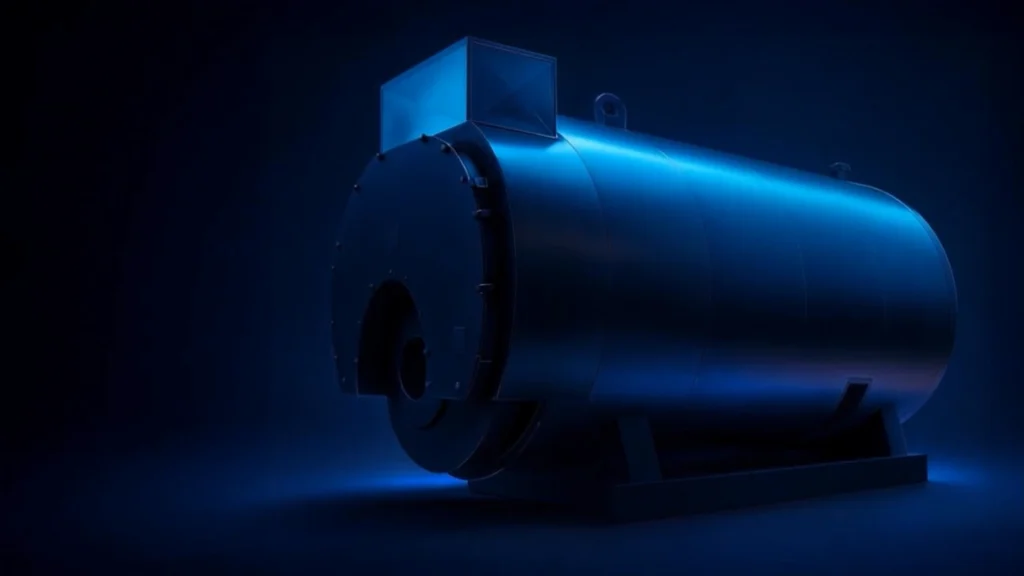
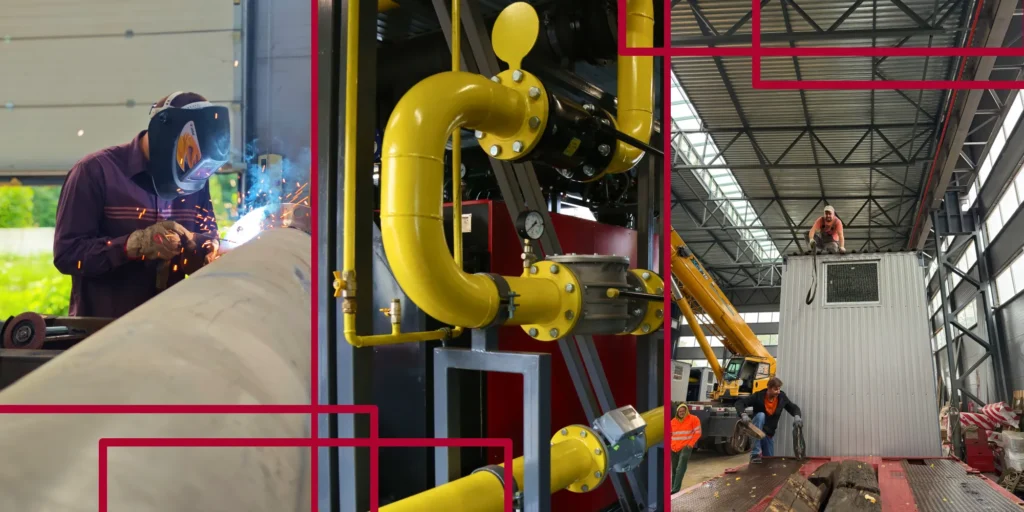
In total, Kolvi has been on the market for 32 years. The most significant indicator is that our boilers annually produce more than 4 million gigacalories of heat energy in Ukraine. This is up to 30% of thermal energy generated in Ukraine. Accordingly, this is about 30% of reconstructed equipment. In numbers, this is more than half a thousand transportable boiler houses.
— Can you explain how you manage to achieve savings?
- Earlier, in the Soviet Union, when a city and its heat supply were designed, they used to put up one large boiler house that transported heat energy to the entire city, or to some significant part of it.
Firstly, it means high losses for transportation underground because it is cooled. Secondly, it is a great danger in the event of attacks, which is obvious to us today, in the context of war.
If you install block, transportable boiler houses, then they can be divided into dozens or even hundreds of small boiler houses located locally near the consumer, if necessary.
Generation near the consumer reduces the distance - the supply distance is much shorter. And in the event of an attack or destruction, the same boiler house that is in reserve is quickly installed.
The more such boiler houses are built, the lower the risk of people being left without heat. You can switch to the nearest boiler house and that's it.
— Is this being implemented as a state program?
- This is not to say that the state program is an understanding of power engineers, market players, and heat generating companies.
They had realized before that they needed to do such reconstruction, but only after the destruction did they come to this conclusion and realize that it also saves money. And now it's also a security issue, because two years ago no one could have thought that it was necessary for security. And now it is extremely important.
In addition, it removes the issue that worries Ukrainians. Everyone thinks that a lot of heat is lost during transportation through pipes. But this is not true at all. The main losses are caused by old boiler equipment.
That is, if the boilers are not modern, especially if they are burnt out or no longer have turbulizers (mechanisms that help remove more heat), then even boilers of our production will significantly lose their efficiency in 10-20 years if they are not maintained properly. I'm not talking about boilers that have been operating for 20-30 years.
Kharkiv is really good, they installed dozens of boilers last year alone, powerful ones, 8 megawatts, 10 megawatts. And they showed the whole of Ukraine how it can and should be done.
- What types of boilers do you produce? How did the war affect the population's demands?
- Firstly, the types of boilers differ in power: from the smallest (7.5 kilowatts) to the most powerful ones that can be transported (30 megawatts).
Second, by fuel type. I'm talking about all the boilers we produce, including gas boilers and those that run on renewable energy sources.
Straw, fuel pellets, firewood, wood, pellets are also “utilizers” that can be used to burn waste. This is a new direction that we are developing. It is not on the stream, but we will test them in certain cities, in small capacities.
We also produce modular boiler houses, which are a set of complex engineering solutions, assembled technical parts that can be transported. Modular because it is a transportable module.
- The former head of the Gas Transmission System Operator, Serhiy Makohon, said that after the successful implementation of the light bulb replacement program, a gas equipment replacement program should be implemented. In his opinion, this will be an expensive project, but it will help ensure Ukraine's energy independence in the future and will be essential. Do you think it is realistic to implement such a project?
- I will say this: if this project is not implemented, it will be impossible to reach where we are going, Europe. It is simply not possible, because in some cases the gas that is burned is burned efficiently only at 30%.
Therefore, without reconstruction of systems and replacement of boiler equipment, European integration is impractical. Pricing, profitability, cost to the end user, and emission standards regulated by European directives will simply be obstacles that we as a country will have to meet.
The next thing is the environment. Sooner or later, in any case, Ukraine will have environmental certificates, similar to those in Europe. And whether we want it or not, we will have to reduce emissions of harmful substances into the atmosphere.
Gas emissions are low, but when generating with old equipment, they are many times higher than with new modern equipment, which is already adjusted, analyzes emissions, stops, mutes and is technologically advanced.
The most important thing is to reconstruct for the sake of the environment, not just to save money.
Advantages: decentralization, security (from direct missile attacks and operational safety, because the equipment can be operated reliably and safely, it will not suddenly fail), economy and ecology.
Here is another example of savings. A boiler house costs UAH 5-10 million. And let's say the old equipment stops working. And if it stops working for 2-3 days, the whole city and consumers freeze, and we end up with a bill of UAH 3 billion, how can we save money?
My vision is as follows: pellets are tomorrow's household products. That is, when every house will have pellet equipment or a diesel heating unit, such as in Europe.
But we will not escape from gas completely, it will be like a stabilizer. We cover something with the sun, something with the wind, but gas is a must. You can always make electricity from gas, but make me gas from electricity. This is a stabilizer that will be able to cover the needs during peak periods.
Also, in large cities, it is logistically impossible to provide these decentralized boiler houses with other fuels in large volumes. So again, it will either be gas or possibly hydrogen, if there is a new method of hydrogen splitting, because there are methods now, but they are still quite expensive. We are also conducting research in this direction.
— What other challenges does the company face now? In particular, how do you solve logistical problems?
- We learned to solve logistical problems in the first days of the full-scale invasion. Now there is no question about it.
So let's go back to the fact that the difficulties are a problem of military insurance.
Because it affects the attraction of funds so that we can further develop our strategic directions. This includes gas production, which is our main strategic direction. This includes green energy, construction of wind and solar power plants, and even gas turbines.
We have already managed to build a plant for the production of fuel pellets. We will talk about this later, but it is a joint project with the state. We want to make fuel pellets from wood waste, sanitary scraps, helping cities to utilize them.
Controlling and supervisory authorities are also a problem. Do not interfere with business, we will pay taxes, create jobs, and develop.
Another problem is normal loans, because they are all limited to military insurance.
But I will give you our example of how we continue to keep up with the pace in such conditions. To build a wind farm nowadays, it takes a year or two, or even all 4 years, for various measurements, geology, geodesy, wind studies and other preparations. And we are doing it. But the actual implementation of this project will take place either after the victory or after the launch of military insurance. That is why we decided not to waste this period and start working now.
- How is the installed equipment maintained? How do you ensure the safety of employees working close to the combat zone?
- We have a service desk that works 24/7. There are clearly defined protocols. They have bulletproof vests, helmets, gas masks - they are provided with absolutely everything. In our offices, we have bomb shelters equipped with water and food for 3 weeks for all employees to stay autonomously.
If we are on the road, it is a local defense of everything possible. Of course, we don't drive armored vehicles, because we send all the ones we buy to the frontline.
The main plant is in Chernihiv, and there is a cool Soviet-era storage facility where we have preserved and restored everything. It has generators, purification systems, hundreds of gas masks, a medical room, etc. When Chernihiv was under occupation, some of the townspeople stayed in our bomb shelter.
— How competitive is this market today? Who are your competitors? What are the advantages of Kolvi?
- I won't say that these are competitors, there are just European suppliers, but only we can make a boiler house so quickly. We have not only the main production facility, but also backup facilities in different parts of the country.
We have absolutely no disadvantages over any foreign competitors. For example, the Germans and Italians have different heating seasons. The Germans have 160 days, Italy 140 days, and we have more than 200. And they have, for example, 10 years of operation, while we have 10-20 years.
- What is the import component of the products?
- About 30% in calm times, because when there was a lot of destruction, this percentage increased significantly, because we were pulling everything from there. But we try our best to produce everything in Ukraine.
— Who do you cooperate with? What international partners do you have?
- We buy burners in Germany, pumping equipment in Italy, and our main partners in Europe. We cooperate fruitfully with them.
We also have developments for the European market, and they are currently being tested. In general, one of the key areas is export.
The three main goals of the company group are green energy, gas production and export of our equipment to Europe. We are now certified in accordance with all European rules and regulations.
There is a demand for our equipment, and it is quite high. Before the war, we had already formed a dealer network to sell our products, but we stopped because we can't go abroad now.
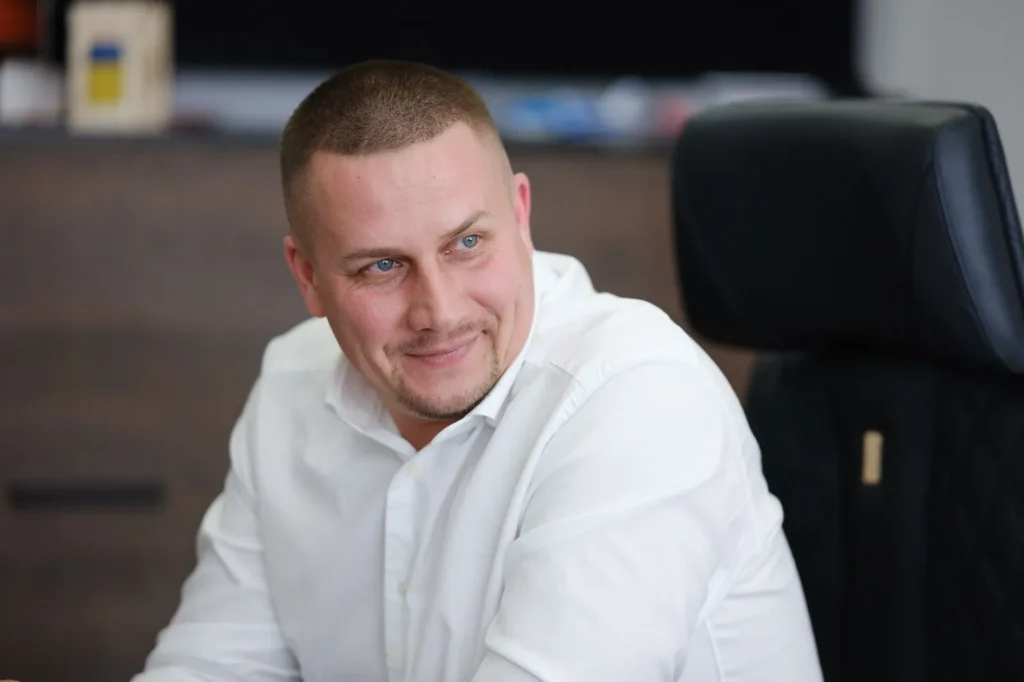
— You are the Chairman of the Board of the Kolvi Charitable Foundation. What projects are you implementing in this area? What goals do you set for the foundation? How do you help the Armed Forces of Ukraine?
- Various projects are being implemented every day. The most important is to help the Armed Forces of Ukraine. This includes armored cars, various equipment, transport, clothing, quadcopters with night vision, and sights (night and regular).
We are helping to restore various affected areas, especially where our military are returning. We rebuild them at our own expense, at the expense of our charitable organization.
The second area is helping children. We support orphanages. Unfortunately, this is often forgotten, because everyone is focused on defense, but this is also an important area that we remember.
We also support hospitals, especially local and district hospitals, where our military undergo rehabilitation. We help with equipment for surgery, special beds, medicines, etc.
And physical education. We have a football club called Podillia, which plays in the First League. We help the team, and these are not only the players on the field. These are hundreds of children and teenagers.
- Environmental support is one of the programs your charitable foundation is working on. Do you have time and resources to work on this area as well?
- To begin with, our boilers are already equipped with low-emission burners. We have also almost built a plant that produces pellets from waste. And our priority is green energy.
I can also announce a new project - a waste incineration facility is under development. Now, while we are discussing it, we are recruiting staff and communicating with scientists. We already have relevant developments. We are working in this direction with Poltava University, Odesa Construction Academy, Ivano-Frankivsk University, and we have also worked with KPI.
- How do you see the future of the company? What do you think Kolvi's role should be in rebuilding Ukraine after our victory?
- “Green” energy and its own city, Kolvi, which will be completely autonomous, with its own kindergartens, hospitals, and research centers. Physical education, innovative projects, technology, comfortable living - everything should be there because it will be the city of the future!
Source: RBC Ukraine