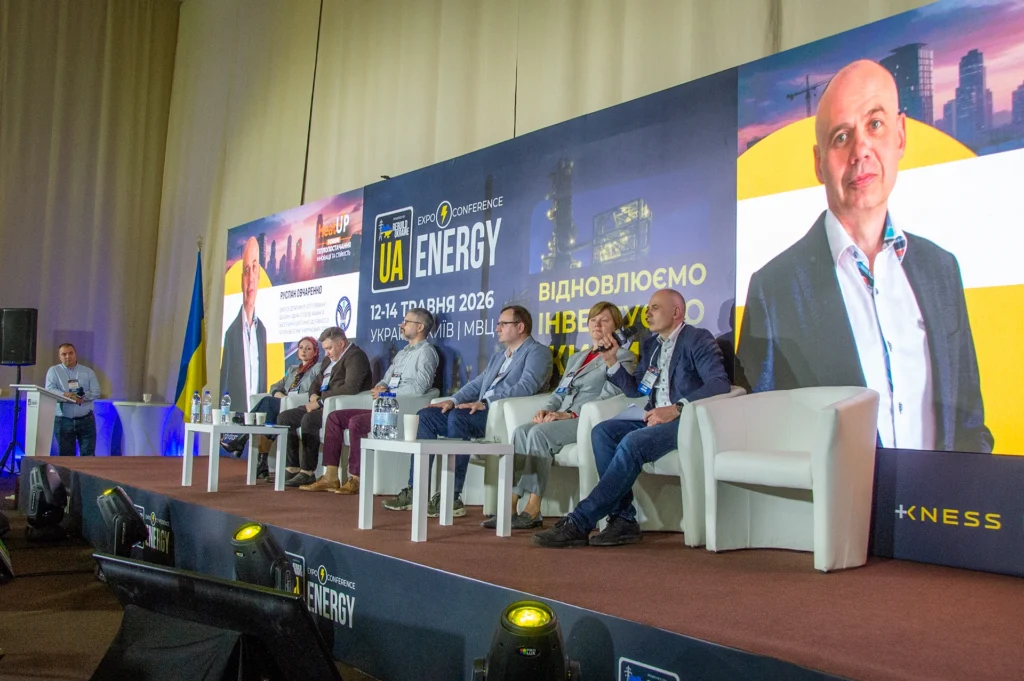




On May 14, 2026, the HEATUP Forum 2026 — a strategic platform for discussing innovations and sustainable solutions in the field of heat supply — took place in Kyiv. Speaking on the sidelines of the forum, Vitalii Surai, Director of the Department of Life Support Systems at the Ministry of Development of Communities and Territories of Ukraine, stated that, as of today, the government has allocated UAH 500 million for the implementation of regional energy supply projects ahead of the new heating season — funding for work on block-modular boiler houses that are already in communities and were purchased earlier with local budget or donor funds.
According to him, the process is accompanied by simplified procedures to speed up putting the equipment into operation. In addition, another UAH 5 billion was allocated: of this, UAH 3 billion for additional procurement of equipment for block-modular boiler houses or advance payments for them, and another UAH 2 billion for the needs of Kyiv.
Regarding the state of funding for the sector, we reached out for comment to Oleksandr Kroshka, board member of Kolvi, a manufacturer of heat-generating equipment. In his view, the sums announced by the government are not sufficient for large-scale modernization of heat generation.
"The figures I heard are, you could say, figures about nothing. Most likely, these are sums for completing or reworking projects in certain regions, for carrying out work, for finishing what was left undone last year. It's difficult to adequately assess the situation and say what exactly has been signed off — whether for 3 or 5 billion. But the need for this year is far greater than 2, 3, 5, or even 50 billion," Kroshka stated.
He noted that some tenders in the sector are already underway; however, many of them are being canceled or are at the contracting stage. At the same time, the projects being implemented most actively right now are those backed by European funding.
According to the Kolvi representative, Ukraine's heat-power sector is effectively in a state of anticipation of its most large-scale reconstruction — namely, the transition to a decentralized heat supply system — right on the eve of the new heating season. According to Kroshka, some enterprises have already begun design work and signing contracts even without secured funding, operating "at their own risk."
"If funds are allocated from the center to the military administration or even directly to the heating network, then the head of the entity, knowing that this is coming, can carry out design work, the signing of contracts, and tenders. Because the key thing is not to sign the contract, but to understand what to sign it for — whether 10 or 100 boiler houses are needed at the site," explains the Kolvi board member.
From Felled Trees to Infrastructure Overhaul: What Obstacles Stand in the Way of a Warm Winter
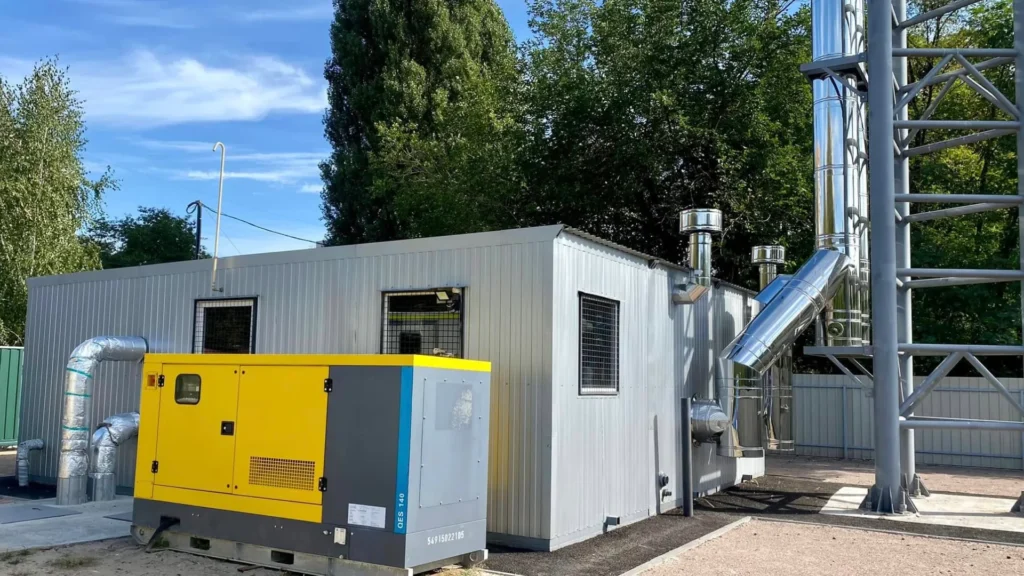
The company itself began preparing for a possible overhaul of the sector last year: it purchased special heat-resistant metal in advance, including seamless pipe, which should be enough to last until the end of 2026.
"We purchased the metal in line with the precise plans set by Kolvi, which are realistic to achieve — that's 200 MW per month. In other words, over 5 months we want to reach the figure of 1,000 MW, and by the end of the year — 1 gigawatt, which is approximately 25% of the entire heat generation of the city of Kyiv," Oleksandr Kroshka outlines the company's future.
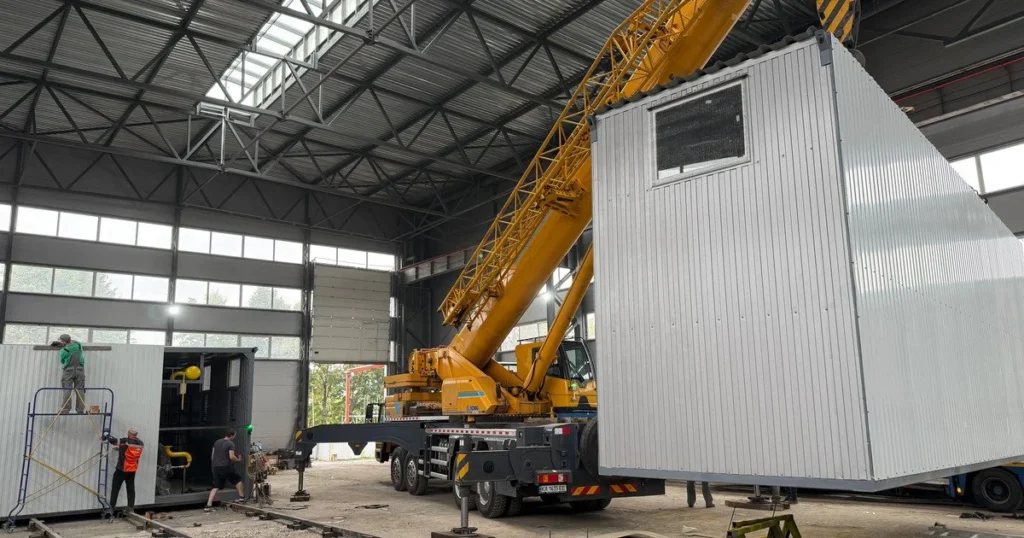
According to him, Kolvi remains the only enterprise in Ukraine with a full cycle of boiler production and is currently 100% equipped for this; however, the staffing situation remains difficult. To find specialists, the company cooperates with relevant educational institutions and "hunts" for specialists — welders and metalworkers — in small towns and villages.
"I'm aware of the practice of other enterprises that are already bringing in workers from India and Pakistan. And cities like Chernihiv are even starting to become overcrowded with them. For now, we are focused solely on Ukrainians," the EP interviewee emphasizes.
As of today, Kolvi has three of its own plants and a number of production sites across Ukraine. The company began preparing its production base, personnel, and equipment last year.
"Since January 2025, we have been purchasing specific, high-cost equipment with production lead times often of 6–9 months, searching for qualified personnel, building our own production facilities, and renting or otherwise bringing in additional sites for the full cycle of boiler house production," Kroshka recounts.
Commenting on the situation with the capital's heat supply, the Kolvi representative notes that Kyiv's heat generation needs amount, by various estimates, to between 4 and 6 gigawatts, but it is extremely difficult to rate the city's preparation for the coming cold weather as "good."
"There has already been a great deal of talk about Kyiv and heat supply, but probably no real action has yet been taken compared to other large cities. So I cannot reassure Kyiv residents — or perhaps we'll content ourselves with the phrase 'maybe they're simply not telling us,'" the specialist suggests.
He notes: it is important to safeguard the infrastructure, the production process, and the implementation of the system's modernization schedule from Russian attacks. This is possible not only through internal solutions, such as the decentralization of production, but also through external ones.
According to Kroshka, the company has European and American partners who are ready, if necessary, to provide backup not only in terms of production and engineering solutions, but also financially.
"The volumes currently being produced in Ukraine require significant financial resources. The companies with which there are agreements — including for the production of boilers and boiler houses outside Ukraine — are international giants with billions in turnover," the EP interviewee emphasizes.
As part of these partnership relations, Kolvi is teaching Europeans how to properly manufacture boiler houses for the Ukrainian market outside Ukraine, since the EU has no comparable experience or standards.
"They don't know what seamless pipe is — I explain it to them on my fingers, I explain the difference. They don't know what welding seams are, or the proper treatment of metal specifically for boiler production. The saddest part is that they have absolutely no idea what a transportable boiler house is. They're used to the idea that you can take a shipping container and stick a boiler inside it. That doesn't comply with the standards at all," Kroshka warns.
He notes that such boiler houses can be used as backup units; however, he is convinced that it is not worth spending resources on something temporary.
"We plan to revive the energy sector, we plan to revive Ukraine and create proper heat generation at a reasonable cost while conserving energy resources. I am against building backup boiler houses any-which-way and just for some limited period," the Kolvi board member concludes.
Source: Economic Truth